
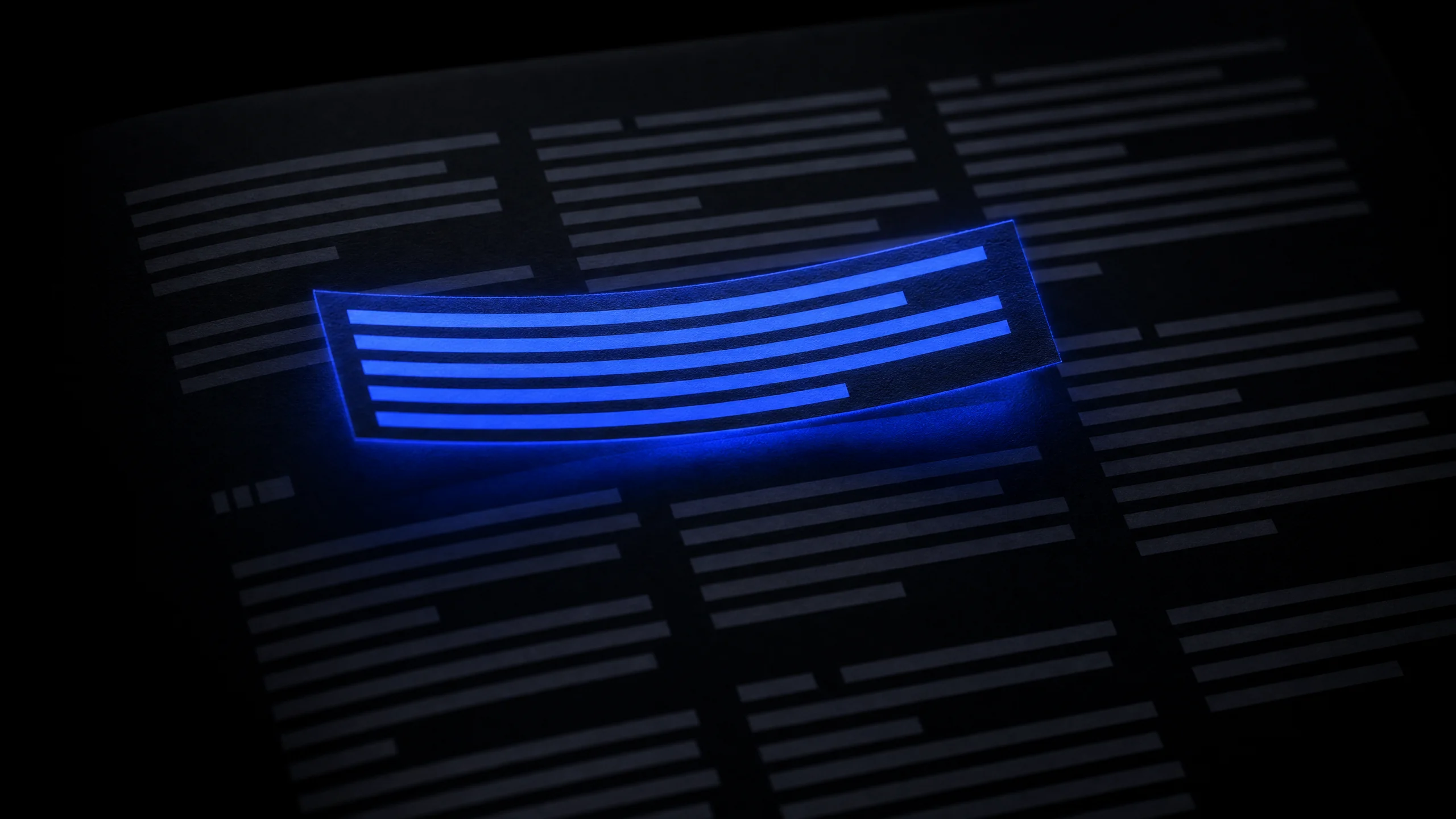
AI systems don't rank content. They cite it. The content that gets cited is direct, authoritative, and structured to be quoted.
AI systems don't rank content. They cite it.
The distinction matters. Ranking is about position in a list. Citation is about being the source the AI quotes when it answers a question. Those are different goals, and they require different content strategies.
How AI systems choose what to cite
AI systems are trained to find the most accurate, direct, authoritative answer to a question. They prefer sources that:
- Answer the question in the first paragraph, not after a long preamble
- Make specific, citable claims rather than general observations
- Demonstrate expertise through specific detail, not through credential claims
- Are consistent with other authoritative sources on the same topic
- Are structured in a way that makes the answer easy to extract
The last point is underappreciated. AI systems are pattern-matching on structure as much as on content. A page that's structured like a reference — clear headings, direct answers, supporting evidence — is more likely to be cited than a page that's structured like a personal essay.
The direct answer rule
The most important rule for AI citation is: answer the question in the first sentence.
Not "in this article, we'll explore..." Not "the answer depends on..." Not a preamble about why the question is important.
The answer. Directly. In the first sentence.
Everything that follows is support for that answer — evidence, context, nuance, caveats. But the answer comes first.
This is also good writing. The inverted pyramid structure — most important information first — is how journalists write, how good technical documentation is written, how good reference material is written. It's not a trick for AI. It's clarity.
The specificity requirement
Generic content doesn't get cited. "SEO is important for your business" is not a citable claim. "Pages that load in under 2 seconds convert at 2x the rate of pages that load in 4 seconds" is.
Specific claims are citable because they're verifiable. They're also more useful to the reader, which is why the AI system prefers them.
The specificity requirement means doing the research. Finding the numbers, the studies, the specific examples. Not summarising what everyone else has said, but saying something specific that's worth quoting.
The authority signals
AI systems use authority signals to decide which sources to trust. Those signals include:
- Links from authoritative sources. The same signals that matter for traditional SEO.
- Consistent presence on a topic. A site that has covered a topic deeply over time is more authoritative than a site with one post.
- Author credentials. Named authors with verifiable expertise are more citable than anonymous content.
- Publication date and freshness. Recent content is preferred for time-sensitive topics.
The structure
Content written for AI citation should be structured like a reference document:
- A direct answer to the question in the first paragraph
- Clear headings that describe what each section covers
- Specific claims with supporting evidence
- A summary or conclusion that restates the key points
This structure serves both the AI and the human reader. It's not optimisation for a machine — it's good writing that machines can also use.
NextGen Intelligence
Senior engineering for the AI era.
We build production-grade software, marketing systems, and digital products for founders who need things to actually work.
Book a call with a senior engineer